The Long Haul: 5 Surprising Realities Inside J.B. Hunt's Financial Playbook
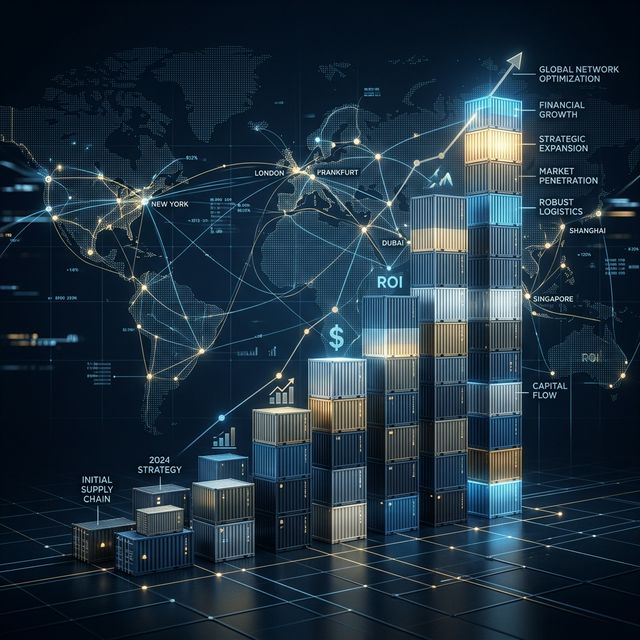

The logistics and transportation sector is notoriously cyclical, and the prolonged freight recession of 2023 to 2024 stress-tested even the most resilient industry giants. J.B. Hunt Transport Services, Inc. found itself navigating a severe drop in volume, aggressive rate competition, and fluctuating fuel prices.
This hasn't been a mere cyclical dip; it has been a structural reset. Navigating a world of ghost fleets and idle containers requires more than just operational grit—it requires a calculated financial pivot.
2023: The Recession Hits and the Pivot Begins
In 2023, J.B. Hunt saw its total consolidated operating revenues drop by 13.4%, falling from $14.81 billion in 2022 to $12.83 billion. Faced with this demand vacuum, the company executed Phase 1: Strategic Consolidation and Opportunistic Acquisition. On September 30, 2023, they acquired BNSF Logistics, LLC for $85.0 million, taking a calculated bet on long-term synergies.
Despite the drop in revenue, they maintained heavy capital expenditures, setting the stage for future growth rather than just hunkering down.
2024: Austerity, Efficiency, and "Cost to Serve"
J.B. Hunt initiated Phase 2: Extreme Capital Discipline and Network Optimization. They slashed net capital expenditures from $1.6 billion to $674 million.
This rigorous approach to lean logistics allowed the company to maximize its existing assets.
They focused extensively on yield management, successfully driving ICS gross profit margins up to 16.1%. This period was defined by doing more with less and extracting the maximum value from every segment.
2025: Stabilization and Aggressive Shareholder Returns
By Q3 2025, austerity measures bore fruit. The core Intermodal (JBI) segment saw load volumes increase by 4%.
With stabilized volumes, J.B. Hunt activated Phase 3: Margin Protection and Returning Capital.
- They repurchased $783.4 million of common stock in the first nine months of 2025 alone.
- They increased dividends to $0.44 per share.
- They realized significant DCS Productivity Gains, proving that strong transportation networks must operate in tandem with superior warehouse efficiency to truly eliminate supply chain bottlenecks.

Conclusion: The Road Ahead
The central question is no longer whether J.B. Hunt can survive the recession, but how much they will profit when the cycle turns. By extending asset lives, narrowing brokerage losses through selectivity, and aggressively buying back shares, J.B. Hunt is betting that its disciplined approach has built a spring-loaded balance sheet.
Whether you are navigating carrier contracts or seeking to drastically improve your warehouse efficiency, integrating lean logistics principles is the key. Visit Yalgar.com to explore cutting-edge strategies.